

It’s no secret that the last two years have been challenging for employers. Early in the pandemic, all businesses except essential businesses were required to shut down. Then as COVID continued, and various states had widely varying standards for workplaces, many organizations had some or all employees working remotely, and essential workers continued to work on premises. As the COVID environment wore on, many organizations had some employees work from home and some come to the workplace, and it made sense. However, in implementing these survival measures and allowing greater flexibility for employees, did we set the stage for two classes of employees; and if so, what can we do about it?
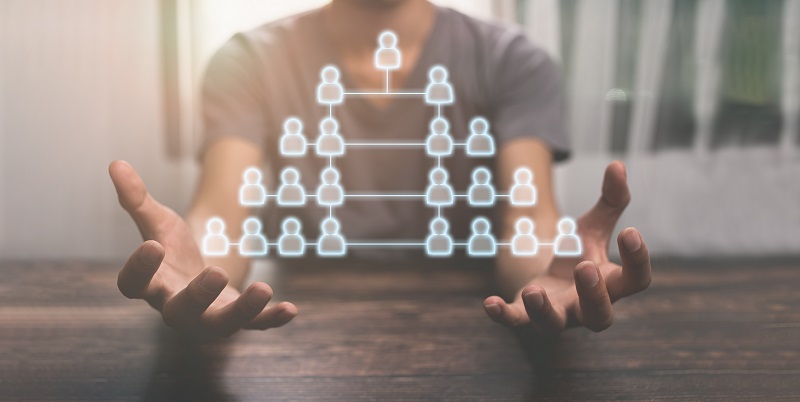
Through the pandemic, many organizations unwittingly created a two-tier organization in two different ways:
- On the one hand, there evolved a division between knowledge/administrative workers and essential workers. Knowledge workers and administrative workers generally have had (and continue to have) more flexible work, hybrid work, or remote work. At the same time, essential workers worked in their usual roles during pandemic; and early on, there were few if any protections afforded them. In the early months masks were not recommended by Federal health officials and were almost impossible to get. These employees often worked long hours (and continue to do so) and had great difficulty in juggling family responsibilities and meeting the needs of their children at home with daycare and schools closed. They worked nonetheless and some became very burned out. Large numbers have left their jobs. Two categories of workers evolved—remote workers and essential, on-premises workers, with essential workers feeling under-appreciated and believing that remote workers were being given preferential treatment.
- On the other hand, in response to employees’ demands for more flexible work and the need to hire and retain the best employees wherever they reside, many organizations now have some employees who have returned to premises and others who are completely remote due to geographical limitations. This arrangement has created a different, more subtle challenge for leaders: how do you give the remote employees the same advantage of exposure to their leaders and managers as the non-remote employees have? Many researchers have found that this new version of presenteeism gives on-site employees a distinct advantage over remote workers when it comes to recognition, salary growth, and promotion. The BBC puts it this way: it’s a “‘mere-exposure effect’, which holds that the more a person is exposed to someone or something, the more they start to grow affinity. If I’ve seen one person 10 times for every one time I’ve seen somebody else, I’m just naturally going to like them more,” explains Thompson. If a particular worker makes themselves more visible, they may naturally ingratiate themselves to others just by being there – even if the others don’t realise it, or can’t pinpoint what is it they like about the ‘presentee’. “This division among employees creates an environment of favoritism, undermines morale, and may result in some employees showing up on premises to the detriment of their own best productivity—all while the manager may be totally unaware of his or her blind spot.
As organizations struggle to hire and retain employees, what can they do to minimize the two-tier organization that may have evolved?
When it comes to the division between essential and non-essential workers, and with the uncertainty of future COVID variants, what is your organization doing to address the needs of essential workers? What can you do to support their mental health? What can you do to raise their rates of pay to accommodate the extra care their families need? Have you considered paid time off options for them as a route to better work flexibility? How can you bring more of a culture of flexibility to these employees as you have for the remote and hybrid workers? One manufacturing organization I work with has changed its typical shifts to accommodate first shift ending at 3, so that the location’s shift structure aligns with typical family rhythms. What creative ideas can your organization design?
In evaluating options for the “remote-versus-on-premises-employees issue,” how can your organization ensure an even playing field between the two groups, making sure managers understand how to engage and provide one-on-one exposure to remote employees and how to avoid the pitfall of treating on-premises employees with favor? How can you plan and implement clear processes and measures for recognition and promotion to help safeguard against favoritism? How can you create training for managers to combat this tendency and build an accountability system that ensures managers will follow these standards?
Asking these kinds of questions can help your organization create practical, workable plans that will prevent or eliminate the two-tier organization. For more information or for a complimentary 60-minute strategy session for reducing employee turnover or assisting managers in addressing these issues, please set a meeting, email me, and/or follow or message me in LinkedIn.