


Inc. Magazine recently reported that between April and September of 2021, more than 15 million workers left their jobs in what is being called The Great Resignation. It’s possible that your organization has been immune to this trend; but whether it has been or not, there are key, practical, timely steps you can be taking right now to reduce or prevent undesirable turnover in your company.
I started using this process in a client location years ago when it was experiencing a 30+% annualized turnover. The client liaison wanted me to help plan and implement cross functional work teams in the location because the locations I worked in inherently experienced lower turnover and higher employee satisfaction. But this location was a mess, and I knew we had to stabilize the turnover situation before trying to implement any large-scale change initiative. The process works just as well in the current environment as it did before the COVID pandemic.
- Find out the real reasons behind the resignations. There is much current expert research available about why we are seeing “The Great Resignation,” and it’s beneficial to read it. But nothing can substitute for finding out the actual reasons your organization is experiencing this challenge.
Exit interviews are not the best place to find out this information. Generally, the information gleaned from the exit interview is too general and too euphemistic. Many employees do not want to burn bridges with their past employers. Some truth may be gleaned from exit interviews, but sometimes not the candor or detail you need.
Gather input from employees about why people are leaving and why others are tempted to. Some organizations use surveys. I have also used face to face interviews; however, the most candid information I have received in turnover reduction work comes from small focus groups. To make these work:
- Make sure no reporting relationships are represented within any focus group.
- Keep the number to 7-9 employees per group.
- These focus groups can be done virtually, but if your employees have returned to the workplace, face to face is best.
- Find an objective party to facilitate these groups. Initially this may be a person from outside your organization. (In my clients, I have facilitated the first round of focus groups, compile the data, etc. but by the second time the focus groups meet when tracking future progress, I help the organization select an internal resource.)
- Keep it simple. Ask the groups to brainstorm one or two questions to uncover reasons why people are leaving.
- As employees brainstorm these reasons, the skilled facilitator needs to make sure it does not become a complaining session and ask effective “tell me more” questions to guide discussion and tease out the real information behind the initial general information and accusations employees provide. (I can usually do one of these focus group sessions in 20 minutes or so, take a few minutes to record everything, and the go on to the next group. Getting input from all employees regardless of shift, is very important.)
- Compile the data, using a frequency distribution. It provides a sense of which issues are perceived to be most prevalent in your organization.
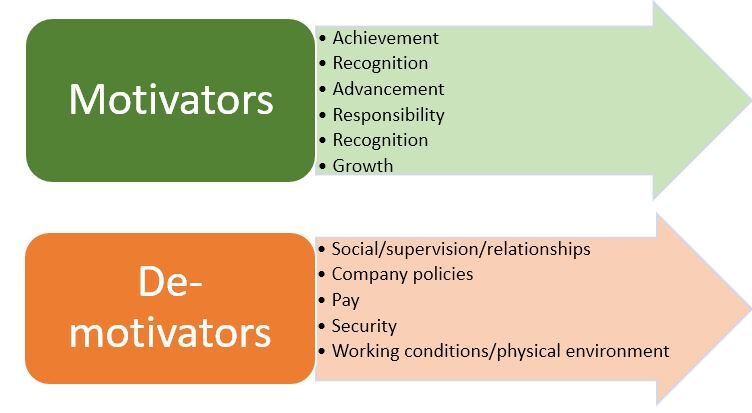
- Evaluate the data against a proven model. I use Hertzberg’s Theory of Motivation.
- Create a plan. One large client organization conducted off-sites, location by location, with the entire location management complement. In addressing employee input, classify each piece if input using the categories in the model. Then develop plans for reducing or eliminating the “demotivators” first. Save the “motivators” for later. I admit, this is opposite to what many consultants recommend, but if you want to good results quickly, you need to first address the things that are demotivating employees and driving them away. In your planning, you may want to correct “low-hanging fruit issues” first to demonstrate your seriousness with this effort. In the current environment, you may uncover some of the following issues: employee burnout, lack of work flexibility, lack of equity in return to work plans.
- Implement the plan. Where you can, utilize small temporary employee teams to address the issues uncovered in employee input. As you implement, communicate the plan, and follow up regularly, including how progress will be tracked. One location’s top executive tracked progress on the plan each week in a Friday managers’ meeting, holding other leaders accountable for the parts of the plan they “owned.” On Mondays, employees were updated in writing and in meetings related to progress on the plan. Once you “put out the fires” by addressing the “demotivators,” you can start working on the more complex cultural factors—the motivators.
- After 90 days, conduct the focus groups again to gather employee input and take the temperature as relates to employee morale and engagement. You may get additional valuable input, especially when employees see that you are serious about improving the situation.
This process has a proven track record for reducing turnover quickly. For example, the company referred to at the beginning of the blog, above, went from 30+% turnover to 9% in less than four months. And they are not alone. Your organization does not need to accept “The Great Resignation.”
For more information or for a complimentary 60-minute strategy session for reducing employee turnover, please set a meeting, email me, and/or follow or message me in LinkedIn.