

Managers can unintentionally — or even intentionally — undermine teamwork in several different ways, but one behavior that stands out is how managers or team members address conflicts within the team. [Read more…]
Managers can unintentionally — or even intentionally — undermine teamwork in several different ways, but one behavior that stands out is how managers or team members address conflicts within the team. [Read more…]
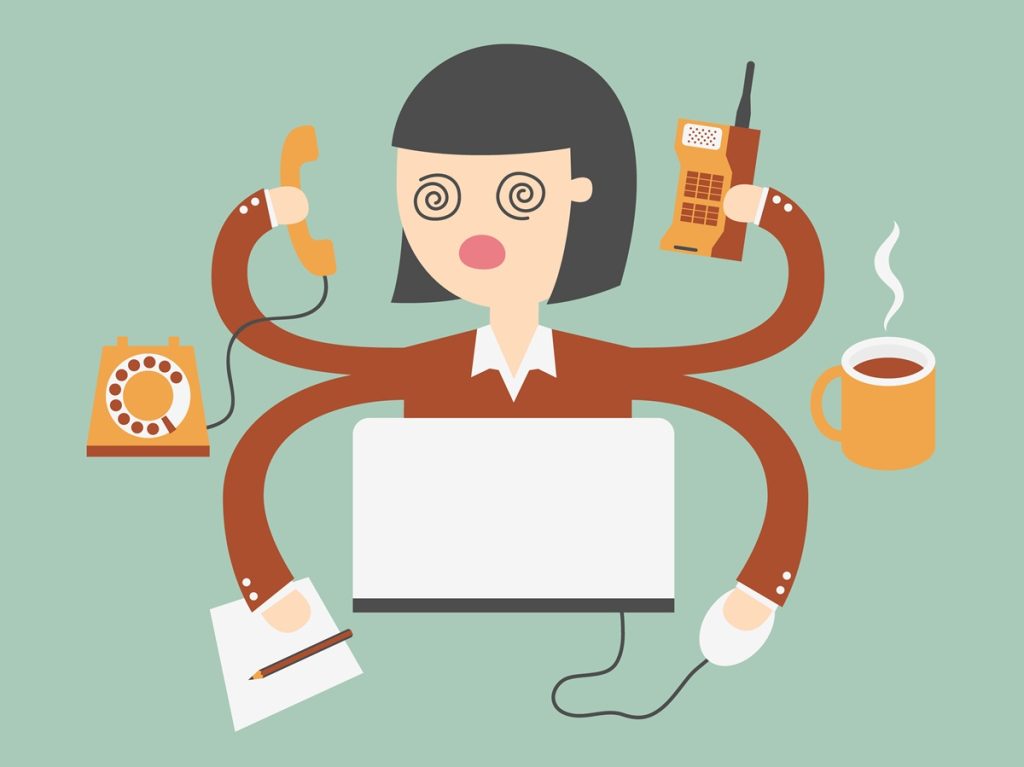
In recent years, organizations of all sizes and at all stages of development have faced competitive, excruciating external pressures in dealing with disruption and economic upheaval. At the same time, employees have come to demand a kinder, gentler workplace with managers and supervisors who demonstrate more compassion. The result is a disturbing trend. I want to say that managers and supervisors “balance” too many responsibilities, but it goes further than that. These leaders have more and more tasks and responsibilities assigned to them—often far too many to execute.
With recent layoffs, crushing inflation, and cost cutting across organizations, leaders at all levels of organizations are dealing with belt tightening. More and more they are being asked to do more with less. Easier said than done. Is that request realistic, or does it mean demanding more and more from employees—perhaps to the point of jeopardizing retention?
How can your organization truly do more with less, get the work done, meet goals–all while having sustainable workloads? It is possible, and there are four steps to follow to get there. [Read more…]

Since COVID hit, our organizations have been struggling to keep performance and throughput up, while also managing the needs of health and safety of our employees. Before the pandemic, with most employees working in the office, managers thought they could tell when employees were busy doing their jobs and working hard (well, perhaps like that famous Seinfeld episode).
After COVID hit, employees in many organizations were largely working from home (WFH), and managers became VERY unsure about how to handle the situation. The longer the organization went without setting clear expectations and measurements related to performance, the more nervous managers became. [Read more…]

During COVID, we have received a great deal of advice related to pivoting our businesses (or staying the course), adapting our processes, managing remote employees, or navigating the combination of some remote workers and some in-office workers. Many organizations are currently in that interesting state of balance with some working from home and others not. Several challenges arise: some employees working from home may perceive those still working from home as “favorites” who are not required to do as much work. Those who have returned to the workplace may be stressed over a higher risk of contracting COVID. Those working from home are juggling children at home and multigenerational households, all the while wondering what they are missing out on, including potential advancement opportunities. How can you reinforce stability and calm?
With continuing uncertainty, one of the best tools in the leader’s toolbox is accountability. Why does accountability matter more now than ever?

This is a strange time for American workers. Some employees are still working from home, which had long been perceived as an employment perk. Yet, when Work from Home (WFH) comes as a result of a continuing pandemic, employees may wonder if they are out of the loop or if they will be left out of promotion opportunities, especially if some employees have returned to the office. At the same time, employees who have returned are wondering if they are jeopardizing their health. In this time of extended uncertainty and complexity, how do you improve your management of performance?
There are two key facets: clarity and consistency.